Heritage / History
The House of Pius Lang
From Swabian precision to a global legacy.
The Pius Lang name is associated with Swabian precision, mechanical ingenuity, and enduring German cutting heritage. From robust working knives to the exhibition-knife tradition and today's globally positioned brand, Pius Lang International LLC carries that legacy forward for a modern audience.
Heritage Account
Origins Traditionally Traced to 1852
The Pius Lang name traces its heritage to 1852 in Stetten an der Donau, in the Tuttlingen region of the Swabian Jura of southern Germany. In a region shaped by rugged conditions, disciplined workmanship, and proximity to a precision-centered technical culture, the Pius Lang name came to stand for durability, utility, and mechanical refinement.
The early reputation associated with the house grew out of the Bauernmesser, or farmer's knife: a multifunctional working tool designed for the practical realities of rural southern Germany. Regional and collector literature link this working-knife tradition to strong backspring tension and practical implements such as awls and hoof-cleaning blades, reinforcing a reputation for utility, durability, and control.
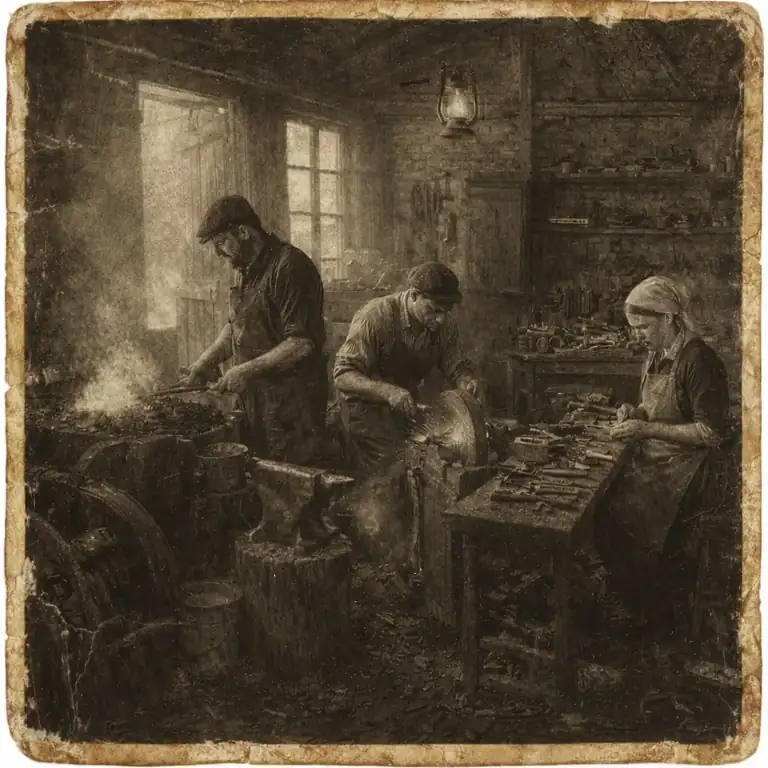
A workshop shaped by work, land, and necessity. Reliability was not a luxury; it was a necessity.
Four Chapters
The Principal Eras
1852 — 1945
Early Stetten Period
Heritage origins traditionally traced to 1852. Often associated with early working knives, natural aging, horn-based handle materials, and regional Stetten an der Donau / Tuttlingen attribution.
1946 — 1998
Walter Lang Era
Often associated with refined stainless construction, serialised exhibition pieces, premium materials, and highly regarded finish quality. Roughly 400 large multi-blade knives commonly attributed to this period, with production generally placed from the 1960s to 1998.
Late 1990s — mid-2000s
Transitional Production
Often associated with mixed materials, variable finishing, and construction details that require closer review. Not generally considered part of the classic heritage collecting categories in the same sense.
Contemporary
Pius Lang International LLC Era
Modern products developed under current brand stewardship and separate from historical exhibition-era collecting categories. Instruments presented for contemporary global use.
Chapter One
A Regional Tradition of Precision
The broader German cutlery story is often told through Solingen. Yet the Tuttlingen region developed a different identity — one closely linked to fine mechanics, metallurgy, and the technical culture that would later make it world-renowned for surgical instruments.
That regional environment helped shape the character historically associated with Pius Lang. The workshop tradition of the area valued not only cutting performance, but also spring tension, fit, balance, and the intricate nesting of multiple implements within a single frame.
By the late 19th century, expanding transport networks in the upper Danube valley, including the Donautalbahn, helped connect regional workshops to broader markets and a wider audience for their work.
1889
The Exhibition-Knife
Tradition
By the late 19th century, the Pius Lang name had become associated in brand and collector narratives with elaborate multi-blade exhibition showpieces — objects created to demonstrate the limits of craft, precision, and compact mechanical design.
Chapter One, Part II
A Name Beyond Its Region
The exhibition-knife tradition elevated instruments from practical objects to displays of craftsmanship, spatial engineering, and mechanical coordination. These were not ordinary working knives — they were technical showpieces designed to demonstrate the limits of what a workshop could achieve.
The challenge of integrating such complexity into a single handle placed the name in the orbit of Europe's great exhibition-knife traditions.
Chapter Two
The Walter Lang Era
In the 20th century, one of the most celebrated chapters of the Pius Lang story became associated with Walter Lang. Auction and collector records place his era at the center of serialised exhibition models and sustained collector recognition.
Roughly 400 large multi-blade knives are commonly attributed to this period, with serial numbers known on the hoof-cleaner blade and production generally placed from the 1960s to 1998. This helps explain why Walter Lang remains closely associated with the brand's later collector identity.
“The instrument speaks before the craftsman does. It is held, weighed, opened — and in those first seconds, everything about the maker's intentions is already revealed.”
On the tradition of precision instruments — Swabian craft recordThis era helped establish a durable benchmark for the name: precision construction, refined presentation, and materials chosen for both performance and permanence.
Chapter Three
A Legacy Through Change
Like many historic European craft names, Pius Lang passed through periods of transition, challenge, and reinvention. Changes in stewardship, production context, and market conditions shaped the later history of the name and marked the end of the traditional workshop era.
The Lang family also remained embedded in local civic life. Ernst Lang served as Bürgermeister during Stetten's 1971 incorporation into Mühlheim an der Donau, underscoring the family's broader presence within the community beyond the forge itself.
Rather than diminish the legacy, these transitions underscore its resilience. What endured was not the exact form of every chapter, but the lasting value of the name itself: Swabian precision, mechanical ingenuity, and the belief that a cutting tool can embody both function and craft.
Chapter Four
Pius Lang International LLC Today
Today, Pius Lang International LLC serves as the modern steward of this heritage brand. The goal is to carry timeless values into contemporary form: precision-minded design, functional quality, engineering discipline, and respect for the historical roots associated with the name.
The brand now operates in a global marketplace through contemporary product development, international distribution, and modern manufacturing methods. By bridging traditional design heritage with modern production, Pius Lang seeks to bring greater consistency, scalability, and technical control to a new generation of products.
Even in a modern commercial structure, the brand continues to draw its identity from the historical tradition associated with Stetten an der Donau, the Tuttlingen region, and the wider Swabian culture of disciplined workmanship.
A Legacy Carried Forward
Pius Lang
From a 19th-century workshop tradition in the Swabian Jura to a modern global brand — shaped by utility, elevated through mechanical distinction, and carried forward for a new generation.
Pius Lang — A legacy carried forward.
A Note on Historical References
Heritage, Stated With Care
Historical references on this page denote brand legacy and the craft tradition associated with the Pius Lang name. They do not imply continuous corporate operation under a single legal entity since 1852, nor do they constitute legal claims of authorship, certification of specific instruments, or historical verification of individual pieces. Nothing on this page should be read as an investment recommendation, valuation, or authentication certificate.